
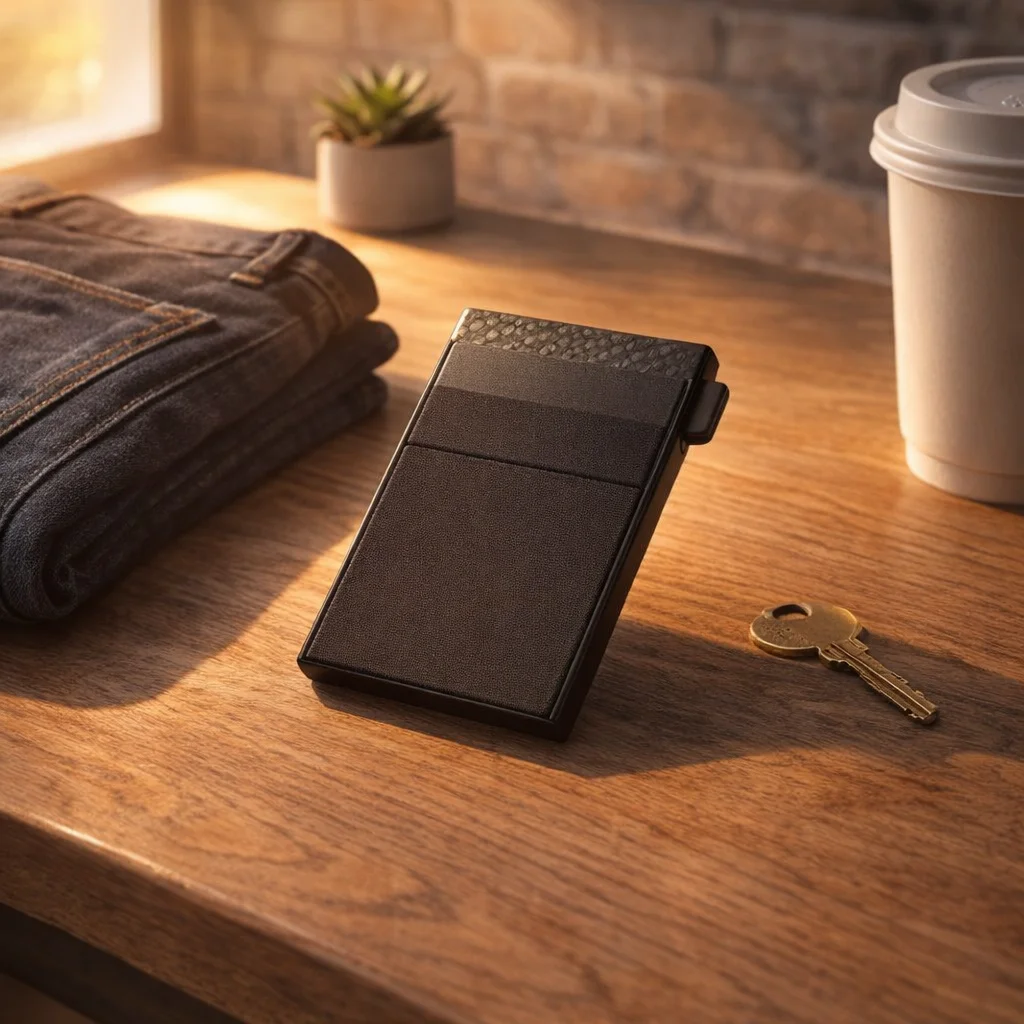
Learning how to choose a minimalist wallet sounds simple enough, but anyone who has stood in front of a wall of options online knows the reality is a little more complicated. Slim wallets come in dozens of styles, materials, and configurations, and picking the wrong one means you end up back at square one with a bulky billfold stuffed in your back pocket. This guide cuts through the noise and gives you a clear, honest framework for finding the right slim wallet for your life.
Whether you are tired of sitting lopsided at dinner because of a wallet the size of a paperback novel, or you just want to streamline your everyday carry, this guide is for you. We will walk through every consideration worth your attention, from how many cards you actually need to carry, to the security features that matter more than most people realize.
Why Go Minimalist in the First Place?
Before diving into what to look for, it is worth understanding why so many people are making the switch. The minimalist wallet movement is not just a trend driven by Instagram aesthetics. It reflects a genuine shift in how people think about what they carry and why.
The Hidden Cost of a Bulky Wallet
A traditional bifold or trifold wallet encourages accumulation. Old receipts, expired loyalty cards, business cards from people you met three years ago, and a collection of coins you will never spend. Before long, you are carrying around a half-pound brick that distorts your posture and stretches the back pocket of every pair of pants you own.
Chiropractors have long pointed out that sitting on a thick wallet tilts your pelvis and can contribute to lower back pain over time. Beyond the physical toll, there is a mental one too. A cluttered wallet often mirrors a cluttered routine, one where friction slows you down at checkout, at security, and anywhere else you need to move quickly.
The Real Appeal of Going Slim
A slim wallet forces intentionality. When you only have room for six cards, you have to decide which six actually matter. That simple constraint has a surprisingly liberating effect. You stop carrying things "just in case" and start carrying only what genuinely serves you.
The payoff is a smoother daily experience. Your jacket sits better. Your pants last longer. You move through checkout lines and airport security with a kind of effortless confidence that a stuffed wallet simply cannot deliver. For a lot of people, the switch to a minimalist wallet is a small change with a disproportionately large positive impact on daily life.
Key Takeaway: The best minimalist wallet is not the thinnest one on the market. It is the one that holds exactly what you need, protects what matters, and disappears into your pocket so you can stop thinking about it.
What to Look For When You Choose a Minimalist Wallet
Knowing how to choose a minimalist wallet comes down to evaluating a handful of core criteria. Not all of them will carry equal weight for every person, but understanding each one helps you make a decision you will actually be happy with six months from now.
Everyday Carry Compatibility
Think about how you actually move through your day. Do you wear suits and need something that slips invisibly into a breast pocket? Do you live in jeans and need something that survives being pulled in and out of a front pocket dozens of times? Do you travel frequently and need something that works at international payment terminals?
Your lifestyle should drive your choice, not the other way around. A wallet that works beautifully for a freelance designer working from coffee shops might be a frustrating choice for someone who commutes on public transit every day and needs instant card access. Map out your actual routine before you start shopping.
Durability Over Time
A minimalist wallet gets handled constantly. It goes in and out of your pocket multiple times a day, every single day. The materials and construction need to hold up to that kind of repetitive stress without peeling, cracking, warping, or losing their shape.
Look for wallets that feel solid and cohesive in hand, not flimsy or loosely assembled. A well-made slim wallet should feel like it has been engineered to last, not like it was thrown together to hit a price point. Pay attention to edges, seams, and any mechanical components. These are the first places a wallet will show its age.
Front Pocket vs. Back Pocket Design
This is a distinction that matters more than most people expect. Wallets designed for front pocket carry tend to be shorter and wider, making them easier to grab cleanly from a shallow pocket. Back pocket wallets can be a little taller since they sit in a deeper space.
Front pocket carry is generally recommended for both comfort and security. Pickpockets target back pockets for obvious reasons, and sitting on a back pocket wallet, even a slim one, is still not great for your spine. If you are not sure which style suits you, try front pocket first. Most people who make the switch never go back.
Getting Card Capacity Right
This is the question most people get wrong when they first start shopping for a slim wallet. They either underestimate how many cards they need, or they overestimate and end up with something that is not really minimalist at all.
The Wallet Audit: Know What You Actually Carry
Before you buy anything, empty your current wallet and sort everything into two piles: things you have used in the last 30 days, and things you have not. Be honest. That gym membership card you have been meaning to cancel, the insurance card you have only needed once in five years, the loyalty card for a coffee shop two cities away. These belong in the second pile.
Most people, after a genuine audit, find they regularly use between four and eight cards. A debit or credit card for everyday spending, a backup card, an ID, a transit card, and maybe a loyalty card or two for places they visit weekly. That is a very manageable number for a well-designed slim wallet.
Planning for Digital Wallets
If you use Apple Pay, Google Pay, or a similar digital payment system regularly, you may find you can cut your card count even further. Many people who make the switch to a slim wallet discover that their phone handles 80 percent of their transactions, and the physical wallet is really just carrying their ID, one backup card, and maybe a transit card.
This is worth thinking through before you decide on capacity. A wallet that holds four cards comfortably might be plenty if your phone is doing most of the heavy lifting. A wallet that holds eight might be the right call if you are in a profession where you need to carry multiple forms of ID or business cards regularly.
Cash: Do You Still Need It?
Cash is becoming less essential in everyday life for most people, but it has not disappeared entirely. Farmers markets, small local businesses, tipping in cash, parking meters in older cities. There are still situations where having a few bills on hand is the right call.
Some slim wallets include a small cash slot or a money clip component. Others are card-only. Think honestly about how often you use cash in a typical week. If the answer is rarely, a card-only design is probably fine. If cash is a regular part of your routine, make sure the wallet you choose accommodates it without looking like it is straining to hold everything together.
Why Security Should Be on Your Radar
This is the section that most buying guides gloss over, but it is one of the most important things to understand when you are figuring out how to choose a minimalist wallet that will actually protect you.
The Invisible Threat Most People Ignore
Modern credit cards, debit cards, transit cards, and even some IDs use contactless technology to communicate wirelessly. This is the technology that lets you tap your card at a payment terminal without swiping or inserting it. It is genuinely convenient, but it comes with a vulnerability that not everyone thinks about.
A bad actor with a small, inexpensive reader can potentially scan your card data from a few inches away, through your pocket or bag, without you ever knowing it happened. This is not a theoretical concern. It is a documented method of theft that has been demonstrated repeatedly by security researchers. It tends to happen in crowded spaces: subway cars, busy markets, airport security lines, anywhere people are packed closely together.
What RFID Blocking Actually Does for You
A wallet with RFID blocking protection creates a barrier that prevents those wireless signals from passing through. Your cards are shielded while they are in your wallet, and they only become readable when you take them out to use them deliberately. It is a passive protection that requires nothing from you. You do not have to activate it, remember to turn it on, or do anything differently than you would with any other wallet.
For anyone who commutes in a city, travels internationally, or simply wants peace of mind, RFID protection is worth having. It adds nothing to the size or weight of a well-designed wallet, so there is really no reason to skip it. The Vaultek slim card holder includes this protection built right in, making it a smart choice for anyone who wants security without the bulk.
Physical Security: The Basics Still Matter
Beyond digital threats, physical security still matters. A wallet that keeps your cards snugly in place is less likely to spill its contents if dropped. A wallet that fits securely in a front pocket is harder to lift than one hanging out of a back pocket. These are simple things, but they add up to a meaningfully safer everyday experience.
Look for wallets where cards are held firmly enough that they do not shift around or fall out, but not so tightly that you are wrestling with the wallet every time you need to pay for something. The best designs find a middle ground where access is smooth and quick, but retention is confident and reliable.
Style, Design, and the Everyday Carry Aesthetic
A wallet is one of the few accessories most people interact with every single day. It deserves to feel good in your hand and look right when you pull it out. Style is not vanity here. It is a legitimate consideration.
Matching Your Wallet to Your Life
Think about the contexts where you most often reach for your wallet. A boardroom, a coffee shop, a gym, a construction site, a restaurant on a first date. The right aesthetic depends heavily on your environment and the impression you want to make.
Classic leather tones convey tradition and formality. Matte black or carbon fiber textures read as modern and tech-forward. Bright colors or bold patterns communicate personality and playfulness. None of these is objectively better than the others. The best choice is the one that feels authentically like you and fits the situations you actually find yourself in.
The Case for a Unisex Design
One of the most underrated qualities in a slim wallet is a design that works for everyone. Wallets with clean lines, neutral colorways, and a refined but understated look tend to age better and appeal across a wider range of personal styles. They also make better gifts, since you do not have to guess at someone's taste as precisely.
The Vaultek card holder takes this approach with its sleek, unisex design that suits professionals, students, travelers, and tech enthusiasts equally well. It is the kind of wallet that disappears into your pocket when you want it to and makes a quiet, confident impression when you pull it out.
Size, Proportions, and Pocket Fit
A minimalist wallet should genuinely disappear into your pocket. Not just thinner than a traditional wallet, but proportioned so that it sits flat, does not create a visible outline through fabric, and comes out cleanly when you reach for it.
When evaluating options, think about the pockets you use most. Front jeans pockets tend to be narrow and shallow. Suit jacket pockets are deeper but still slim. Coat pockets are more forgiving. The wallet you choose should fit your most-used pocket without forcing or bunching. If you can, find a way to test the fit before committing, whether through a generous return policy or a physical retail experience.
Making the Switch: How to Transition to a Slim Wallet
Buying the wallet is the easy part. Actually transitioning to a genuinely minimalist carry takes a little more intention, but the process is straightforward once you know what to expect.
The 30-Day Card Audit
Start by doing the audit described earlier, but commit to living with your reduced card set for 30 days before you decide anything is missing. Most people are surprised to find that the cards they thought were essential turn out to be rarely needed, and the ones they kept are more than enough.
If you find yourself genuinely needing a card you left out, add it back. The goal is not to carry as little as possible for its own sake. The goal is to carry exactly what you need and nothing more. That number is different for everyone, and it takes a little real-world testing to find yours.
Digitizing What You Can
Take a few minutes to look at every card in your current wallet and ask whether a digital version exists. Many loyalty programs have apps that replace physical cards entirely. Some insurance providers offer digital ID cards that are legally accepted in most situations. Transit systems in major cities increasingly support mobile ticketing.
Every card you can move to your phone is one fewer thing your wallet needs to hold. This is not about going paperless for its own sake. It is about making your physical carry as lean and functional as possible so that the slim wallet you choose can actually do its job well.
Building the Habit of Front Pocket Carry
If you are switching from back pocket to front pocket carry, give yourself a week or two to build the new habit. It feels slightly unfamiliar at first, mostly because you have years of muscle memory pointing your hand to the wrong pocket. Within a week or two, front pocket carry will feel completely natural, and you will wonder why you ever did it any other way.
Pro Tip: Put your new slim wallet in your front pocket the moment you take it out of the box. Do not give yourself the option of defaulting to old habits. The faster you commit to the new routine, the faster it becomes second nature.
Top Mistakes People Make When Buying a Minimalist Wallet
Even with the best intentions, it is easy to make a choice you will regret. Here are the most common missteps and how to avoid them.
Buying for Capacity Instead of Clarity
The most common mistake is buying a slim wallet that holds more than you need, reasoning that the extra capacity is a safety net. The problem is that extra capacity gets filled. If your wallet holds twelve cards, you will find twelve cards to put in it. The constraint is the point. Buy for the number of cards you actually need, not the number you might theoretically want to carry someday.
A wallet that holds six cards and keeps them organized and accessible is dramatically more useful in daily life than a wallet that holds twelve and makes you dig through a stack every time you need the right one.
Skipping Security Features to Save Money
Budget-friendly slim wallets are widely available, and many of them are perfectly good products. But one place where cutting corners genuinely costs you is security. A wallet without RFID protection leaves your contactless cards exposed in a way that a few extra dollars of investment would prevent entirely.
This is especially true if you travel, commute in dense urban environments, or frequent crowded events. The Vaultek slim card holder manages to include solid RFID blocking protection while staying accessible at a budget-friendly price point, which is exactly the kind of value equation worth looking for.
Ignoring the Return Policy
A slim wallet is a deeply personal everyday carry item. What looks perfect in product photos does not always feel perfect in your actual pocket with your actual cards. Always buy from a retailer with a clear, fair return policy so that if the fit or feel is not right, you are not stuck with something that frustrates you every day.
Read reviews from people who have been using the wallet for several months, not just the initial unboxing impressions. Long-term durability and how the wallet holds up after daily use for six months tells you far more than how it looks fresh out of the box.
Overlooking the Importance of Quick Access
A slim wallet that requires two hands and a moment of concentration to retrieve a specific card is not actually an improvement over a traditional wallet. It is just a different kind of frustrating. Quick, one-handed card access is one of the most important functional qualities in a minimalist wallet, and it is worth prioritizing over pure aesthetics.
Look for designs where cards are easy to fan out or pop up with a simple gesture. The best slim wallets make accessing your most-used card feel almost automatic, the kind of smooth interaction that makes you appreciate good design every single time you use it.
Frequently Asked Questions
How many cards should a minimalist wallet hold?
Most people find that four to eight cards covers everything they genuinely need on a daily basis. Do a honest audit of your current wallet before you buy, sorting cards into what you have used in the last 30 days versus what you have not. You will likely find that your essential card count is lower than you expected. A good rule of thumb: choose a wallet that holds your actual essential cards comfortably, with perhaps one slot to spare.
Is RFID blocking actually necessary in a minimalist wallet?
RFID skimming is a real, documented form of theft that targets contactless cards. While it is not the most common type of fraud, it is also entirely preventable with a wallet that includes blocking protection. Since many well-designed slim wallets include this feature without adding bulk or cost, there is little reason to skip it. It is especially worth having if you travel frequently, commute in crowded cities, or attend large public events.
What is the difference between a card holder and a minimalist wallet?
The terms are often used interchangeably, but there is a subtle distinction. A card holder is typically a card-only design with no provision for cash. A minimalist wallet usually includes at least a small cash slot or money clip in addition to card storage. Which is right for you depends on how often you use cash. If your phone handles most of your transactions and you rarely carry bills, a card holder is often the cleaner, slimmer solution.
Can a slim wallet work for someone who carries a lot of cards?
It depends on what you mean by "a lot." If you genuinely need ten or more cards accessible every day for professional reasons, a traditional wallet may serve you better. But most people who think they need many cards discover after an audit that they only regularly use a fraction of them. Try digitizing loyalty cards and less-frequently-needed IDs, and you may be surprised how quickly your essential card count drops to something a slim wallet handles comfortably.
How do I know if a minimalist wallet will fit in my specific pockets?
The safest approach is to buy from a retailer with a generous return policy so you can test the fit in your actual everyday clothing. Front jeans pockets vary significantly between brands and cuts, so what fits perfectly in one pair of pants may feel snug in another. As a general guide, look for wallets that are roughly the width of a standard credit card or slightly narrower, and no taller than about three and a half inches for comfortable front pocket carry.
The Bottom Line
Knowing how to choose a minimalist wallet is really about knowing yourself: how you move through your day, what you actually need to carry, and what kind of experience you want every time you reach into your pocket. The right slim wallet is not the one with the most features or the flashiest design. It is the one that quietly does its job so well that you stop thinking about your wallet entirely.
Start with an honest audit of what you carry. Prioritize access, security, and a design that suits your lifestyle. Do not let extra capacity tempt you into recreating the bulk you are trying to escape. And make sure whatever you choose includes solid protection for your contactless cards, because that is a layer of security that costs you nothing in terms of size or convenience.
If you are ready to make the switch, the Vaultek slim card holder is a smart place to start. It combines a genuinely slim profile with built-in RFID blocking protection and a refined, unisex design that works as well in a boardroom as it does on a weekend. It is the kind of everyday carry upgrade that makes you wonder why you waited so long.